

Hong Kong left the silver standard on 9 November 1935. With silver coins withdrawn, the Government introduced its first $1 note three days later, on 12 November, as an emergency response to the shortage of everyday money. HSBC had issued Hong Kong’s $1 notes exclusively from 1872 to 1935; the new government note met an immediate monetary need rather than beginning as a declared permanent replacement for the bank’s issue.
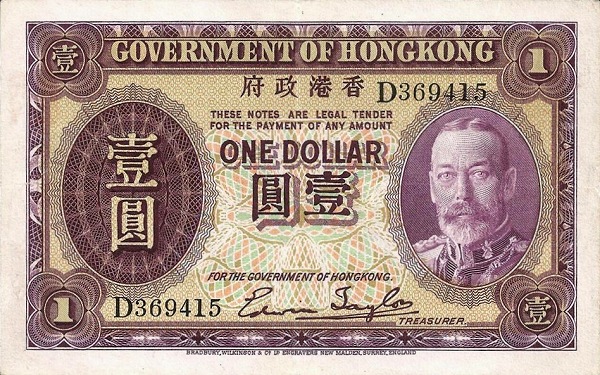
The Government had commissioned Bradbury Wilkinson in Britain months before the currency change, so notes were ready when the crisis arrived. Catalogued as Pick 311, ND (1935), the type shows George V at right against a purple-brown ground. His full beard gave the note its enduring Cantonese nickname, “Whiskered Man” (鬍鬚佬).
A brief first chapter
George V died in January 1936, barely two months after the note entered circulation. The portrait was subsequently changed to George VI while the compact Bradbury Wilkinson format remained. The Hong Kong History Museum records the George VI Government $1 as entering circulation in 1939, making the George V note a notably brief opening chapter in the series.
Design and survival
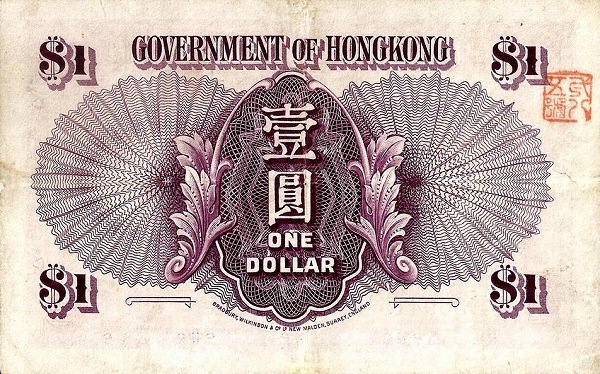
The note measures about 126 × 79 mm. Fine engraved line work, bilingual issuer titles and value panels carry the design; the reverse establishes a layout retained by later Government $1 notes. Circulated examples often show folds, softened corners or cleaning. Original paper, balanced colour and an undisturbed surface matter more than superficial brightness when judging condition.
Collector’s perspective
- Pick 311 is an undated type conventionally catalogued as ND (1935).
- Its George V portrait makes it the only bearded-king design among the Government $1 portrait types.
- Check folds, edge repairs and washing carefully; genuinely crisp original paper is less often encountered than on later issues.