

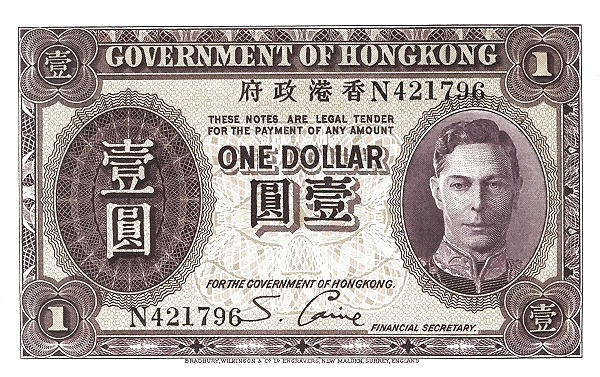
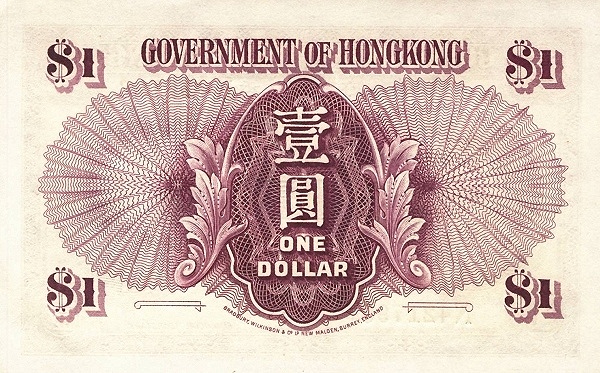
After George V’s death, the Government replaced his bearded portrait with the younger George VI while retaining the Bradbury Wilkinson frame. The purple note is known to Hong Kong collectors as the “Purple Emperor” (紫皇) and catalogued as Pick 312, ND (1936).
The catalogue year and the circulation history describe different things. P-312 is commonly labelled ND (1936), but no year appears on the note itself. The Hong Kong History Museum states that Government $1 notes bearing George VI entered circulation in 1939. Read together, “1936” is the catalogue attribution and “1939” the documented circulation milestone.
From silver crisis to prewar currency
Government $1 notes originated in the emergency created when Hong Kong left the silver standard on 9 November 1935. HSBC had been the denomination’s sole note issuer since 1872, and the Government’s first George V note appeared on 12 November 1935. 紫皇 carried that compact government format into the late 1930s, before the Japanese occupation began in December 1941.
Design and condition
Printed in Britain by Bradbury Wilkinson, the note measures about 126 × 79 mm. Its bilingual titles, ornamental borders and reverse value panels closely follow the 1935 design; portrait and colour provide the clearest distinction. On surviving notes, inspect the purple ink for fading and the paper for pressing, washing, repaired edges or pinholes.
Collector’s perspective
- Pick 312 is the undated purple George VI type.
- Colour can vary with ageing and photography; portrait, print and paper should be considered together.
- Prewar circulation and wartime disruption make clean, original examples appreciably harder to encounter than later green issues.